

Gentle and Effective Atlas Orthogonal Care in Alpharetta
Dr. Ashley Goodman earned her Doctorate in Chiropractic at Life University before pursuing a board certification in the Atlas Orthogonal technique from the Sweat Institute in Atlanta, GA. This specialization is achieved only after numerous additional hours of study of the cervical spine and the use of an advanced scientific instrument to make precise, delicate adjustments to the atlas vertebra at the top of the neck.
Request an AppointmentWhat is Atlas Orthogonal?
Atlas Orthogonal is a specialized chiropractic treatment that corrects the misalignment of the atlas, the top vertebra of the neck and spine. Using precise x-ray measurements and a specialized machine, this technique gently and accurately realigns the atlas without the need for manual manipulation. It is one of the most gentle, specific, and highly effective methods available for restoring proper cervical spine alignment.
The atlas bone sits at the very top of the neck and supports the full weight of the head. When this bone is even slightly misaligned, it can create tension, irritation, compression, and disruption throughout the nervous system. Even the smallest degree of misalignment can have a significant ripple effect on other areas of the body.
If you think of your spine as a chain, the atlas is the first link. When it sits perfectly straight, at a 90 degree angle (orthogonal) with the spine, the remaining vertebrae follow accordingly, allowing the nervous system to function at its best. When that top link is twisted or out of position, the entire chain becomes strained.
Misalignment of the atlas causes the essential nerves running from the spine to the muscles, organs, and extremities to become, in a sense, short-circuited. This can lead to an array of symptoms and conditions such as:

Neck pain

Headaches

Migraines

Vertigo

Dizziness

Back pain

Numbness

Tingling

Reduced / painful rotation of the neck

Muscle tension / tenderness

Degeneration of vertebrae, discs, and disc spaces
Conditions Treated with Atlas Orthogonal
- Headaches & Migraines — Frequent reduction in both severity and frequency. Learn more about our migraine and headache relief care.
- Neck & Back Pain — Alleviates muscular tension and spinal misalignment. See our chronic neck pain page.
- Vertigo & Dizziness — Addresses dysfunction caused by upper cervical nerve irritation. Explore our vertigo and dizziness care.
- TMJ & Jaw Pain — Helps stabilize the base of the skull.
- Neurological Conditions — Including MS, Fibromyalgia, and Trigeminal Neuralgia.
- Postural Correction — Corrects hip imbalance and scoliosis-like patterns caused by a tilted atlas.
How Does Atlas Orthogonal Treatment Work?
The goal of Atlas Orthogonal treatment is to return the atlas to its proper 90 degree alignment with the spine. The process begins with x-rays taken at the clinic, which the doctor uses to determine the exact degree of misalignment and to make precise calculations before any adjustment is performed.
The adjustment itself is delivered using a unique percussion instrument, the Atlas Orthogonal machine. A protractor-like guide directs the delivery of the exact correction needed based on the x-ray measurements. The stylus of the machine lightly touches the patient just below the ear, allowing a sound wave to travel directly to the atlas bone. The instrument delivers this sound wave with a force of only about 3.5 pounds of pressure, so patients typically feel almost nothing during the process.
Because the atlas sits just beneath the skull, manual adjustments in this area can involve variable force, angle, and speed, which is not ideal for such a delicate region, especially for patients with a history of degeneration, trauma, or surgery. The Atlas Orthogonal instrument eliminates that variability, delivering a safe and consistent correction every time.
Following the atlas adjustment, the vertebrae of the spine begin to realign like links in a chain, allowing the nervous system to flow freely and the body to restore its natural ability to heal. The doctor may also incorporate complementary techniques during the session, such as Flexion/Distraction, the Activator Method, and ArthroStim, to relax muscles and support the rest of the spine. Achieving lasting correction typically requires a series of carefully planned treatments to retrain the muscles and ligaments that have adapted to the misaligned position over time.
Request an Appointment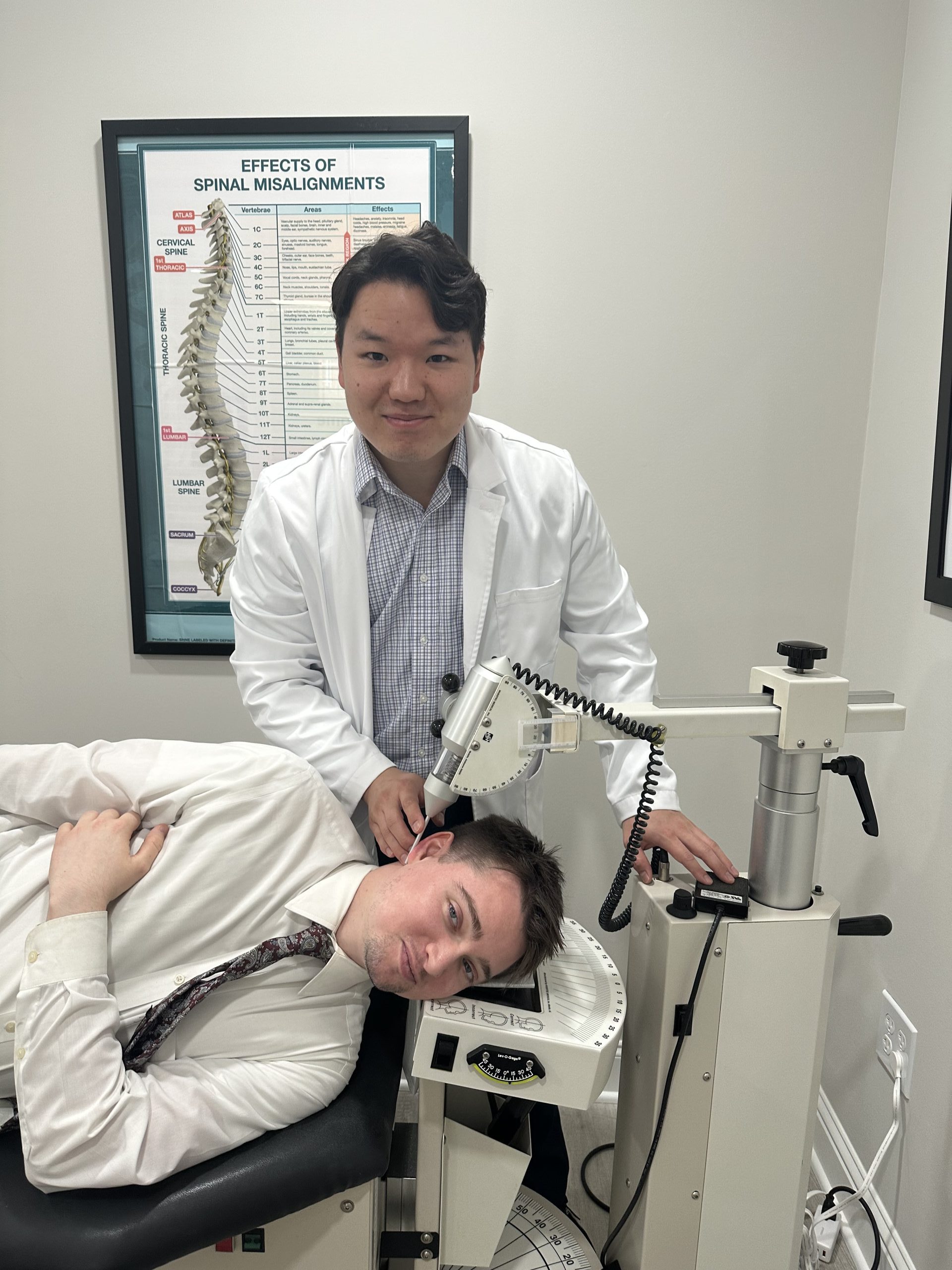
Facts About Atlas Orthogonal
- Atlas Orthogonal was developed by Dr. Roy Sweat of Atlanta, Georgia in 1980.
- The technique is designed to correct the body’s imbalance and restore restricted nerve impulses from the brain, achieving optimal health by repositioning the atlas at the top of the body’s center of gravity.
- When the atlas is misaligned, nerve impulses and blood flow become restricted, the lower spine compensates and shifts out of alignment, muscles stiffen, and the immune system’s effectiveness decreases, all because the body is working overtime to balance a non-centered head.
- Leg length imbalance and muscle tightness throughout the body are common signs of atlas misalignment.
- The Atlas Orthogonal adjustment uses an extremely light tapping pressure that is soft, precise, and highly controlled.
Experience the Atlas Orthogonal Difference
If you are searching for a precise, gentle approach to correcting upper cervical misalignment in Alpharetta, GA , Atlas Orthogonal care at Alpharetta Family Chiropractic may be exactly what your body needs. Call (770) 641-0029 or request an appointment online today.
Frequently Asked Questions
What is Atlas Orthogonal chiropractic?
Atlas Orthogonal is a specialized, instrument-based technique that precisely corrects misalignment of the atlas, the top vertebra of the neck, using x-ray analysis and a gentle percussion instrument, without twisting or cracking.
Does the Atlas Orthogonal adjustment hurt?
No. The adjustment uses only about 3.5 pounds of pressure delivered through a light touch below the ear, so most patients feel almost nothing during the process.
What conditions can Atlas Orthogonal help with?
It may help with headaches and migraines, neck and back pain, vertigo and dizziness, TMJ, certain neurological conditions, and postural imbalances caused by a misaligned atlas.
How is Atlas Orthogonal different from a regular adjustment?
Unlike traditional manual adjustments, Atlas Orthogonal uses precise x-ray measurements and a consistent instrument-delivered correction, eliminating the variability of force, angle, and speed.
How many Atlas Orthogonal treatments will I need?
Lasting correction usually requires a series of carefully planned treatments to retrain the muscles and ligaments. Your doctor will create a personalized plan after your initial evaluation.
How do I schedule an Atlas Orthogonal evaluation?
Call Alpharetta Family Chiropractic at (770) 641-0029 or request an appointment online to begin your evaluation.